
Hip hop
…
The End of the Pronoun Whom
…
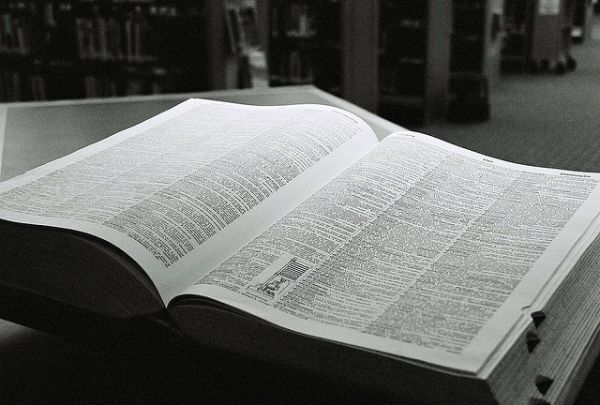
In standard English grammar, the pronoun who is used as a subject and whom as a direct or indirect object. Here's an example:
Who will decide to whom we will give the responsibility of carrying Alex's sedan chair today?
In this sentence, who is the subject and whom is the indirect object. It's a distinction that's easy to forget and increasingly people are. Megan Garber of The Atlantic writes that the proper use of whom is dying out:
Articles in Time magazine included 3,352 instances of whom in the 1930s, 1,492 in the 1990s, and 902 in the 2000s. And the lapse hasn’t been limited to literature or journalism. In 1984, after all, the Ghostbusters weren’t wondering, “Whom you gonna call?”
Whom, in other words, is doomed. As Mignon Fogarty, the host of the popular Grammar Girl podcast, told me: “I’d put my money on whombeing mostly gone in 50 to 100 years.”
Who is to blame? In part, the internet:
Technology seems to be speeding the demise. Online, on-screen, strict rules are systematically broken—for brevity’s sake, for clarity’s sake, and sometimes for the sake of ease or irony or fun. (Because LOL, amirite?!) What the Indiana University linguist Susan Herring refers to as “e‑grammar” is, she points out, a grammar only in the broadest sense of the word. In a context that can make whom seem almost aggressively retrograde, we err intentionally, breaking rules that are in some cases, Jack Lynch writes in his book The Lexicographer’s Dilemma, simply “prejudice representing itself as principle.” And the Internet, itself almost aggressively forward-looking, institutionalizes the errors. Dating sites talk about the people “who you match with.” Twitter offers its users a recommendations list titled “Who to Follow.”
Link -via David Thompson | Photo: greeblie
POLL: Should we retain the pronoun whom?
- Yes. Proper grammar matters.
- No. Languages normally change over time.
- Whom cares?
- Just show me the answers to the poll.
Anime Fight Scene Photo Meme
…

Photo: Ryo Ichikawa
Will the wonder that is Japan ever cease? First, the country gave us Dragon Ball Z. Then she gives us Kamehameha, a meme where people imitate anime fight scenes. How awesome is it? Let's just say that it's over NINE THOUSAAAAAAND!
More over at Kotaku - via PetaPixel

Photo: @mrmr0630

Photo: @ari_snows


Assyrian Dalek, ca. 865 BCE
…
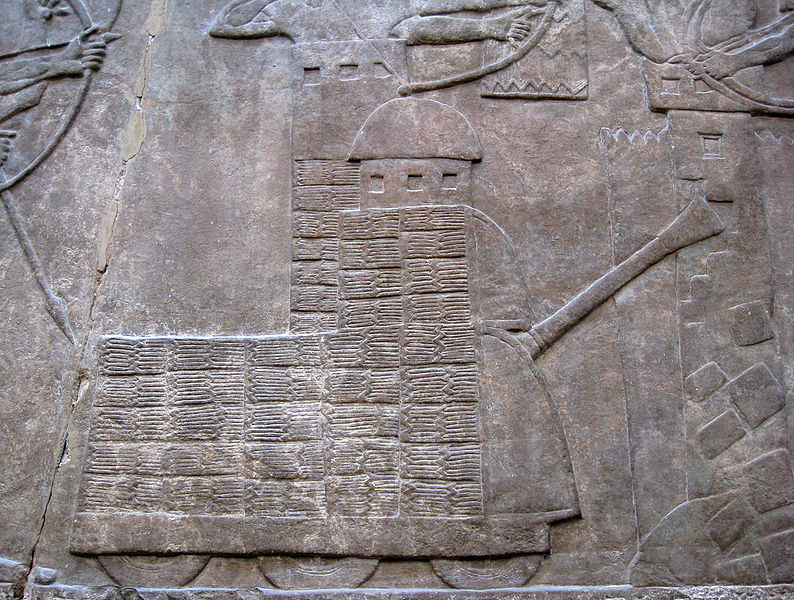
From Wikipedia: "English: A large wheeled Assyrian battering ram with an observation turret attacks the collapsing walls of a besieged city, while archers on both sides exchange fire. From the North-West Palace at Nimrud, about 865-860 BC; now in the British Museum."
File:Assyrian battering ram.jpg (Thanks, Justin!) 
 |  |


“I’m Google” by Dina Kelberman
…


Thanks to Ada Hamza for pointing me to “I’m Google” by artist Dina Kelberman. Her Tumblr project is a fascinating stream of consciousness sourced from Google image search and Youtube. Each image seamlessly leads to the next. The experience of scrolling through it all reminds me of the film Baraka.
I’ve included a zillion more images below so you can get a better sense of what I’m talking about!

| |